

 CN
CN



 Fill out a inquiry form




Smart Surfaces Using Lumissil Matrix LED Drivers for Automotive Cabin and Kitchen Appliance
Applicance
Some of the most interesting Human Machine Interfaces (HMI) in modern automotive cabins and kitchen appliances are the ones that stay hidden until needed. Automakers are removing switches from dashboards and door panels, and appliance makers are doing the same by moving controls behind polymer and tinted glass surfaces. The controls are still there, but now they sit under the surface. As a hand approaches the cabin's dashboard or appliance, a control panel illuminates from what appeared to be a solid material moments before, revealing icons, sliders, and status indicators visible through the surface itself. That is a smart surface display, also called a hidden-until-lit or dead-front display, and it is becoming a trend for both automotive cabin and modern kitchen applications.
The concept is simple, but the implementation is not. A matrix of LEDs sits behind a translucent decorative layer, whether that is a piano-black polymer, wood vinyl, textured fabric, or tinted glass. When the LEDs are off, the surface looks like one continuous material. When they are on, light passes through translucent or laser-etched openings to form crisp icons and animations. Add capacitive touch sensing, and the surface becomes a full control panel while enabling a flat, easy-to-clean surface. Adding capacitive proximity sensing allows the surface to wake as a user's hand approaches, reducing power consumption when it is not in use. This article looks at the engineering behind these displays and the Lumissil products that make them practical in automotive and appliance designs.
WHY SMART SURFACES, AND WHY NOW?
Automotive designers are decluttering the cabin by replacing mechanical switches with backlit surfaces and capacitive touch controls across the center console, door panels, and rear HVAC panel. Industry analysts point in the same direction. The global automotive smart surface market was valued at roughly $6.7 billion in 2024 and is projected to approach $57 billion by 2034. Meanwhile, the same trend is emerging in kitchen appliances.
Recent kitchen design reports point in the same direction: handleless cabinets, cleaner appliance surfaces, and controls that stay hidden until needed. For appliances, this means surfaces that stay dark until needed, then light up for status indication and user control, precisely what smart surface technology delivers.
This user experience is exactly what OEM design studios discuss when enabling applications with fewer physical switches, better cabin ergonomics, ambient lighting, and a cleaner Human Machine Interface (HMI) in both automotive and kitchen applications.
ANATOMY OF A SMART SURFACE
From an engineering standpoint, a smart surface display combines three subsystems.
• LED Matrix Backlighting: Hundreds to thousands of individually dimmed LEDs form icons, 7-segment indicators, and animations behind the decorative surface layer.
• Capacitive Touch Sensing: Electrode patterns beneath the same surface detect finger contact through several millimeters of plastic, tinted glass, or wood vinyl, replacing mechanical buttons entirely.
• Proximity Sensing: The same capacitive front end, tuned for longer range, detects an approaching hand so the interface can wake before the first touch.
The challenge is making all three subsystems work together reliably. LED brightness must be uniform across the matrix so icons do not look blotchy through the decorative surface. Dimming must be flicker-free because a hidden-until-lit display that faintly glows in a dark cabin or kitchen is neither hidden nor premium. Touch and proximity sensing must detect a gloved hand, tolerate moisture, and reject electrical noise from LED drivers sitting only millimeters away. This is where dedicated silicon matters.
INSIDE THE COCKPIT: IS32FL3776 AND IS32FL3761
For automotive cockpit and door panels, the IS32FL3776 is a 36 x 6 matrix LED driver for interior and exterior automotive signaling applications. It provides 36 constant-current channels at up to 60 mA each and supports up to 216 individual LEDs using internal or external PMOS scanning. Per-LED PWM up to 16-bit, combined with 8-bit DC scaling, supports smooth fades and a clean off state for dead-front designs.
The interface is configurable for either UART or SPI (33 MHz), with direct addressing of up to 25 devices on one bus. Spread spectrum, 180-degree phase delay, built-in de-ghosting, and cycle-by-cycle LED open/short detection help address EMI and diagnostic requirements in the vehicle environment.
For larger animated surfaces, the IS32FL3761 scales the matrix size to 33 x 12, supporting 396 individually dimmed LEDs per device. This allows the same LED-driver architecture to support anything from small backlit areas to a large animated panel integrated across the center console.
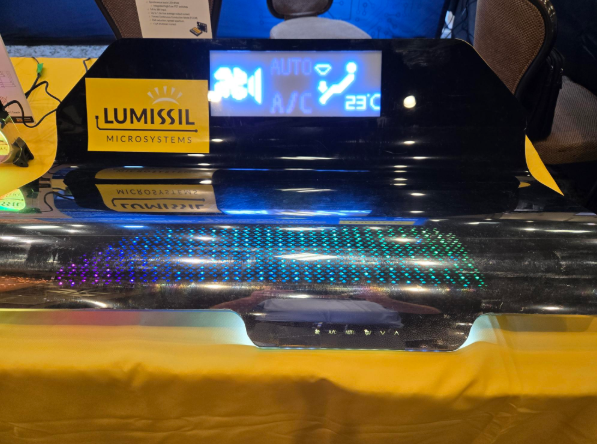
Figure 1: Lumissil Smart Surface demo using IS32FL3776
IN THE KITCHEN: IS31FL3758 AND IS31FL3761
On the consumer side, the IS31FL3758 and IS31FL3761 bring hidden-until-lit control panels to refrigerators, dishwashers, ovens, and range hoods. The IS31FL3758 integrates 40 constant-current sinks, up to 60 mA each, with 9 switches/gate drivers for internal or external PMOS switches. It supports matrices up to 40 x 9, or 360 LEDs.
By using an external PMOS FET architecture, designers have the option to move the switching heat away from the LED driver IC and into external FETs. This allows higher peak LED drive currents while maintaining IC thermal performance. In a 1/9 multiplexed configuration, the result is an average LED current of up to 6.67 mA per LED, making it well suited for bright panels behind tinted overlays where higher light output is required.
For applications requiring a different matrix size and current capability, the IS31FL3761 expands the portfolio. It drives a 33 x 12 matrix, or 396 LEDs, with individual 12-bit PWM, 8-bit DC scaling, and a global 8-bit step current register over a 1 MHz I2C or 12 MHz SPI interface. Both devices integrate de-ghosting, spread spectrum for EMI reduction, and per-LED open/short detection readable by the host MCU.
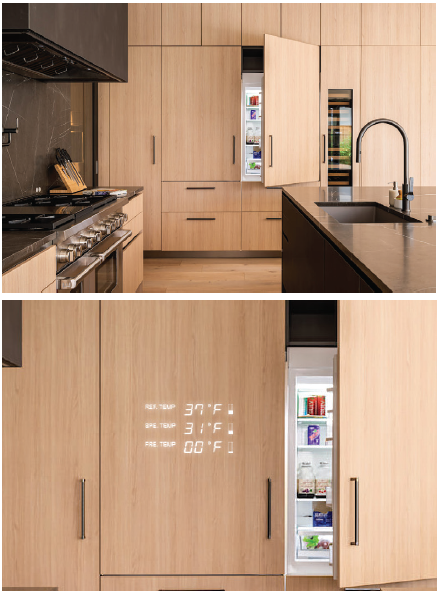
Figure 2: Modern kitchen with smart surface displays
WAKE ON APPROACH, TOUCH TO CONTROL: THE IS31CS897X FAMILY
A smart surface is not smart if you must hunt for it in the dark. Lumissil's IS31CS897x capacitive/proximity sense MCU family, including the IS31CS8974A, IS31CS8975, and IS31CS8977, adds the sensing layer needed for the user interface.
All members use a similar architecture: an 8-bit MCU with a dual-slope charge-sharing capacitive touch controller delivering up to 20-bit SNR, active proximity sensing with mutual-capacitance sensing support, and a shield-electrode output for moisture immunity, which is important for kitchen surfaces that are frequently wiped down or exposed to moisture.
The IS31CS8974A, for example, scans up to 19 touch keys, wakes from a 5 µA sleep on approach or touch, and communicates with the system over I2C, SPI, or UART/LIN. The family members differ in key-input count, package and pin count, memory size, and peripheral mix, so designers can choose the smallest device that covers the panel requirements.
The prefix indicates the grade: IS31CS897x parts are consumer/industrial, while the IS32CS897x versions are AEC-Q100 qualified in wettable QFN packages for automotive requirements.
The pairing is what makes the smart surface interface work: proximity sensing wakes the LED matrix as the user reaches for the surface, capacitive touch allows interaction through the sealed overlay, and the LED driver provides instant visual feedback. An example of these parts together and how they form a smart surface display is shown in the block diagram.
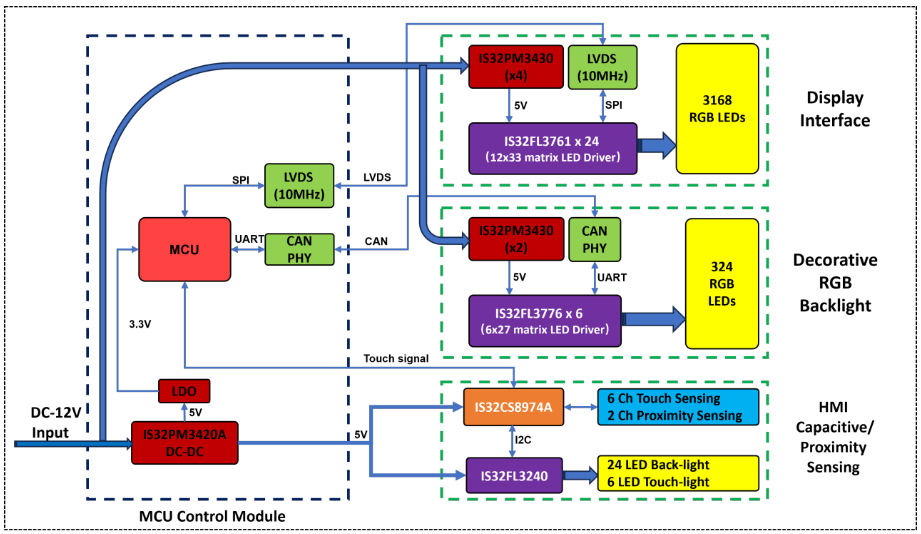
Figure 3: Block diagram example of a smart surface display application
THE INTERFACE IS THE SURFACE
Automotive interiors and kitchen appliances are converging on one idea: the most premium interface is the one you do not see until you need it. With the IS32FL3776 and IS32FL3761 for automotive smart surfaces, the IS31FL3758 and IS31FL3761 for consumer appliances, and the IS31CS897x/IS32CS897x family for capacitive and proximity sensing, Lumissil provides a complete silicon foundation for hidden-until-lit displays.
For datasheets, evaluation kits, and design support, visit www.lumissil.com.
CONTACT
Technical support: marketing@lumissil.com
Sales support: sales@lumissil.com
About Lumissil Microsystems
Lumissil Microsystems specializing in analog/mixed-signal products for automotive, communications, industrial, and consumer markets. Lumissil's primary products are LED drivers for low to mid-power RGB color mixing and high-power lighting applications. Other products include audio, sensors, high-speed wire communications, optical networking, and application specific microcontrollers. Lumissil Microsystems has worldwide ofices in the US Taiwan, Japan, Singapore, mainland China, Europe, Hong Kong, India, and Korea.



 analog@lumissil.com