

 CN
CN



 Fill out a inquiry form



Lumissil Newsletter Aug 2026

 Go Back
Contents
- Lumissil Launches Its Redesigned Global Website: Search Smarter. Design Faster.
- Horticulture Lighting Modular 48V Spectrum Control with Lumissil LED Drivers and MCUs
- Smart Surfaces Using Lumissil Matrix LED Drivers for Automotive Cabin and Kitchen Appliance
Latest Press Releases/New Product Introduction
Upcoming Event Dates
Product Spotlight
· Lumissil Launches Its Redesigned Global Website: Search Smarter. Design Faster.
· Horticulture Lighting Modular 48V Spectrum Control with Lumissil LED Drivers and MCUs
· Smart Surfaces Using Lumissil Matrix LED Drivers for Automotive Cabin and Kitchen Appliance
Lumissil Launches Its Redesigned Global Website: Search Smarter. Design Faster.
Lumissil Launches a New Global Website
A faster way to find products, evaluate solutions, and access complete design resources
Lumissil Microsystems is excited to introduce its redesigned global website, built to help engineers, purchasing teams, distributors, and customers quickly find the information and resources they need. Supporting our portfolio of analog and mixed‑signal solutions, including LED drivers, microcontrollers, touch sensors, audio, power management, connectivity, and embedded processing products, the new site combines product discovery, technical documentation, design tools, inventory visibility, purchasing access, and support into a single, easy‑to‑navigate platform. Whether you're evaluating components, designing a new system, or sourcing products, the website provides a more efficient path from product selection to implementation.
FIND THE RIGHT PRODUCT FASTER
Guests can choose the search method that best matches what they are researching for (Figure 1):
• Global Search - search the entire website by keyword across products, applications, technical content, and other resources.
• Part Number Search - go directly to a known Lumissil device and its dedicated product page.
• Parametric Search - filter by electrical specifications, package, interface, grade, topology, and key features.
• ECAD Model Search - identify products with available schematic symbols, PCB footprints, and 3D models.
• Cross-Reference Search - find potential Lumissil alternatives to competitive part numbers.
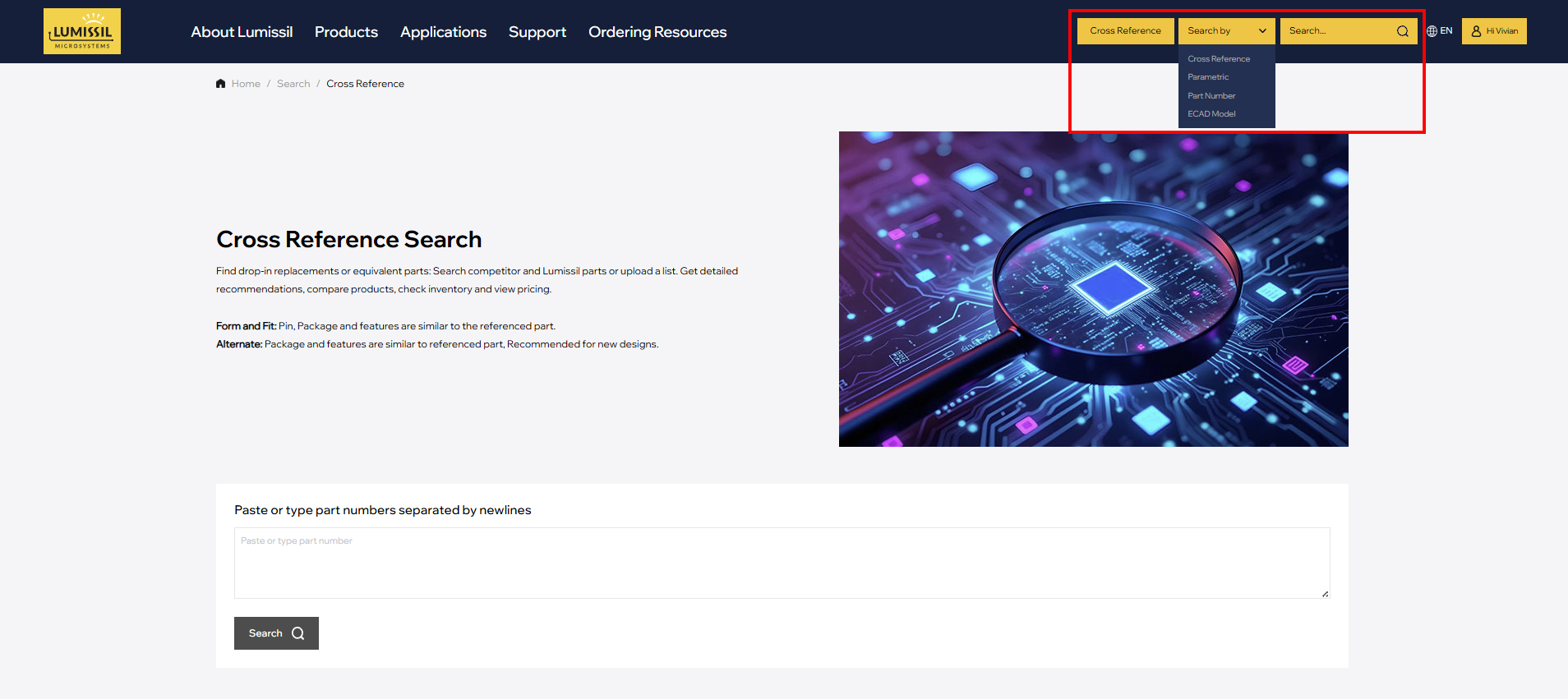
Figure 1: More ways to research and compare devices
NEWEST WEBSITE FEATURES
Enhanced search, complete product resources, online design support, worldwide inventory, account features, and mobile‑friendly access.
• Enhanced search: global, part number, cross‑reference, parametric, and ECAD
• Complete product pages with technical and design resources in one place
• Online design support: calculators, documents, app notes, software, and more
• Login Portal: User accounts with support access and resource history
• Real‑time worldwide inventory visibility and distributor purchasing access
• Application‑focused navigation across key markets and system solutions
• Quality & Compliance Resources: Access quality, reliability, environmental, and regulatory compliance documentation to support product evaluation and design requirements
• Mobile‑friendly access across desktop, tablet, and phone
ENHANCED PRODUCT PAGE
After searching for a device using the navigation bar, users can select a Lumissil part number to open a dedicated product page (Figure 2). The product page consolidates all available design, technical, and purchasing resources in one location, including:
• Datasheets and online PDF review
• Evaluation-board information
• ECAD symbols, PCB footprints, and 3D models
• Application notes, design documents, and block diagrams
• Software and development packages
• Sample requests, real-time inventory, and distributor purchasing links
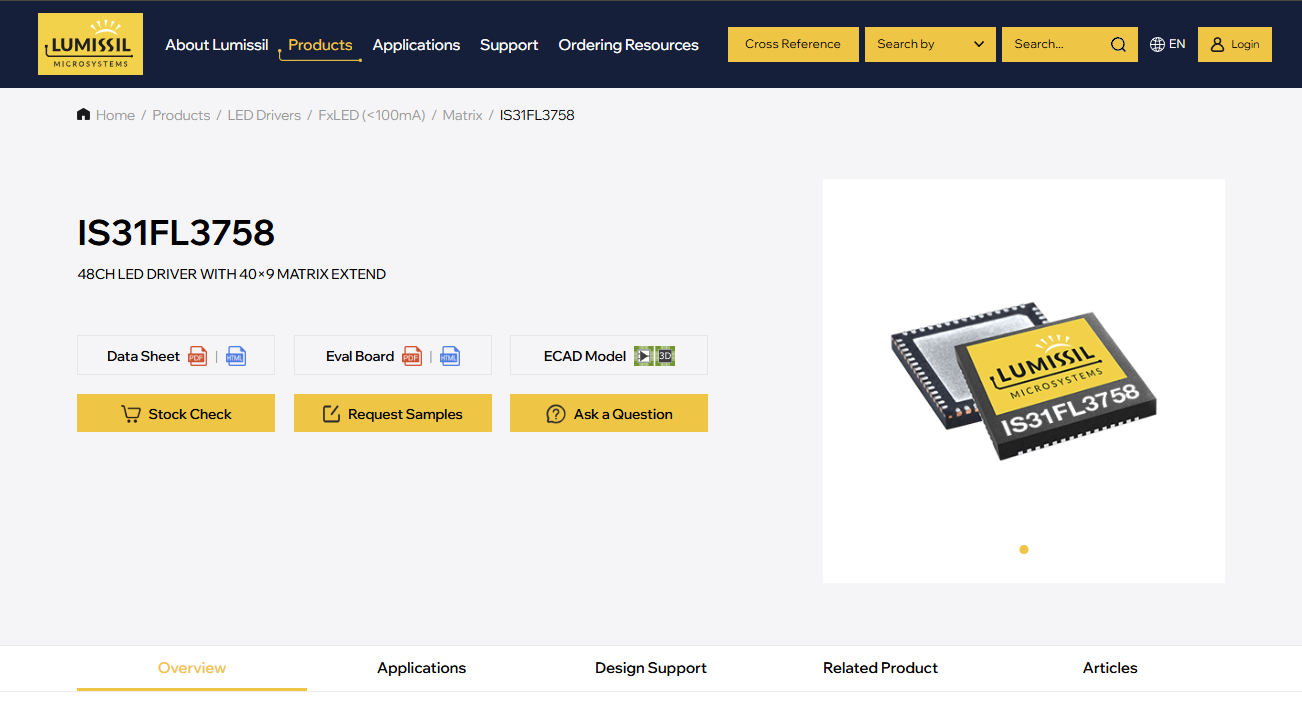
Figure 2: Product page example
DESIGN SUPPORT
Lumissil has also expanded the technical support content to help speed up development and reduce research and design time. Online calculators (Figure 3), application notes, design documents, reference diagrams, evaluation-board resources, and software help engineers move more efficiently from product evaluation to implementation. The newly added design calculator tool helps estimate inductors, sense resistors, capacitors, and compensation networks for DC/DC converters and LED driver applications. This design calculator can be found under Support > Design > scroll down to Software & Tools > Calculator.
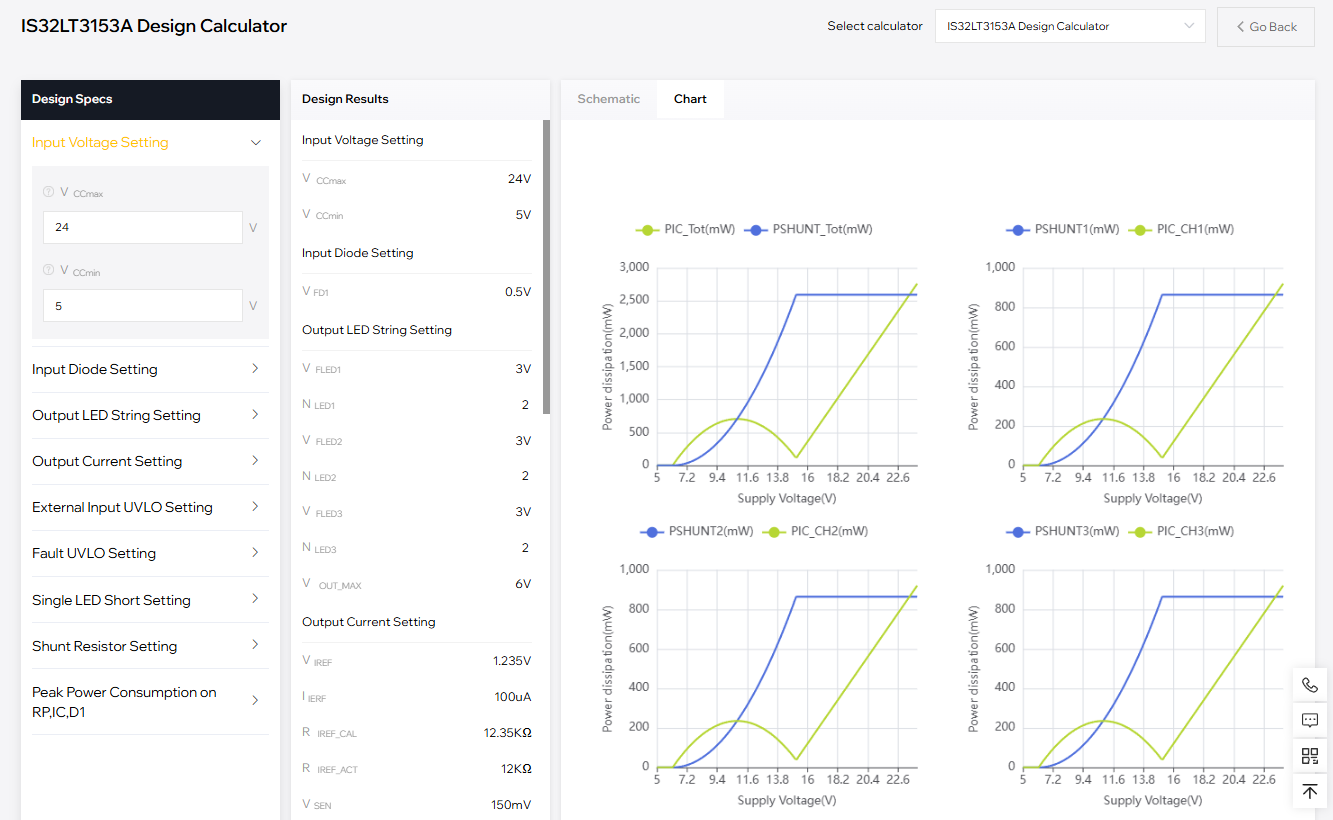
Figure 3: Design calculator tool example
USER ACCOUNTS
A new secure user portal provides a more personalized experience across the Lumissil website. By creating an account, users can access software downloads, save resources for future reference, and leverage cross-reference search capabilities to accelerate product evaluation and design activities.
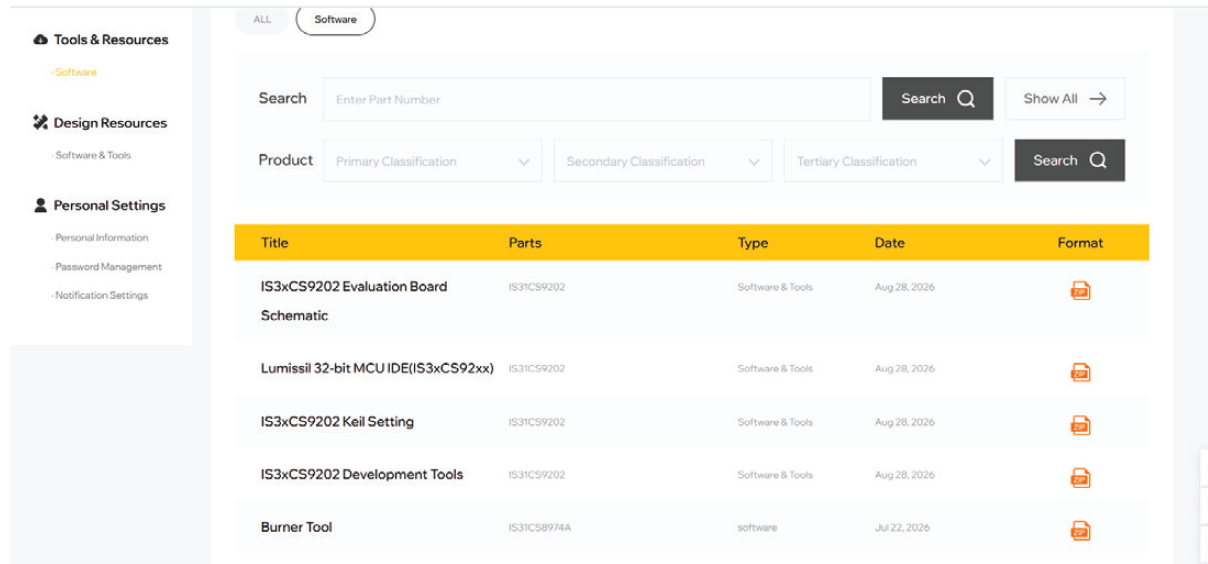
Figure 4: User portal example
GLOBAL INVENTORY CHECK
The Lumissil website now has a worldwide stock check which provides distributor inventory information and purchasing options. By improving visibility into product availability, the tool helps streamline sourcing, reduce procurement delays, and accelerate project timelines.
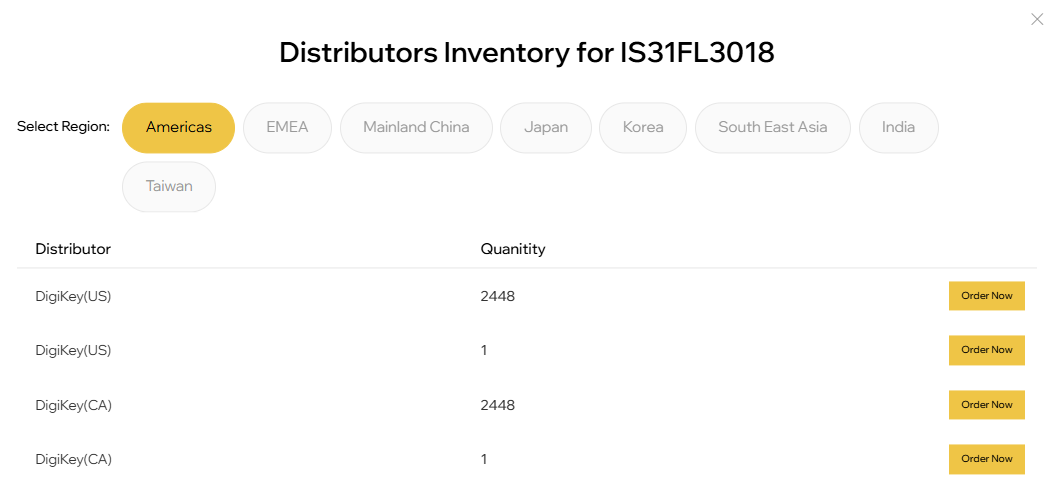
Figure 5: Global inventory check by distributors
APPLICATION FOCUSED NAVIGATION
Browse by market segment to discover recommended products, design resources, reference materials, and development tools tailored to specific application needs. Application pages connect Lumissil products to Automotive, Industrial, Consumer & IoT, and Communication systems (Figure 6).
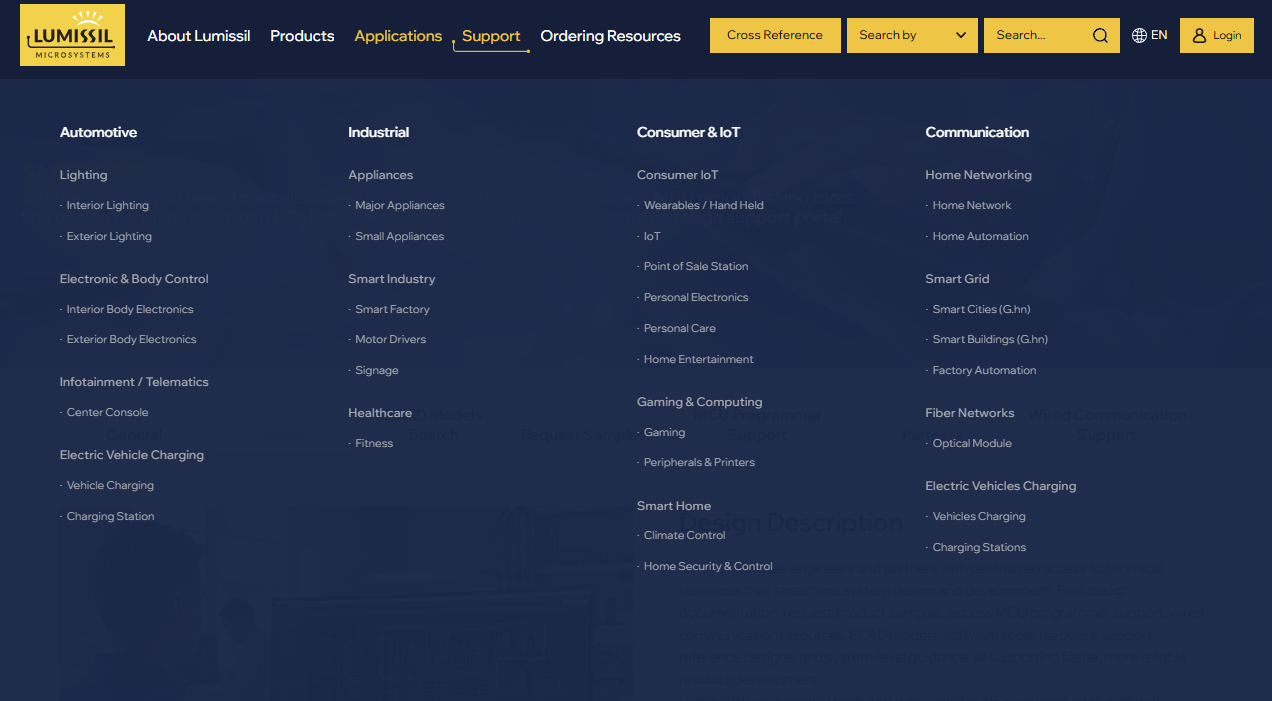
Figure 6: Application possibilities
QUALITY & COMPLIANCE RESOURCES
Access Lumissil’s corporate responsibility policies, environmental commitments, and ethical business practices in one location. This resource helps customers and supply chain partners quickly verify compliance, sustainability initiatives, labor standards, health and safety practices, and environmental policies that support responsible product sourcing and supplier qualification (Figure 7).

Figure 7: Dedicated section to corporate responsibility
MOBILE FRIENDLY
Responsive design and clearer navigation make resources easier to access across desktop, tablet, and mobile devices (Figure 8).

Figure 8: Example of the website in mobile view
CONCLUSION
From product search and system-level application guidance to design resources and real-time inventory visibility, the new Lumissil website was built to help engineers move from concept to implementation more efficiently. We invite you to explore the new experience and discover the tools and resources available to support your next project.
Horticulture Lighting Modular 48V Spectrum Control with Lumissil LED Drivers and MCUs
Horticultural LED grow lamps enable food production in a controlled environment, often close to large markets in urban centers. To optimize crop yield across different growth stages, these systems must deliver a mix of light wavelengths, photon densities, and exposure schedules. A tunable grow lamp will combine blue, red, white and amber LEDs along with specialized UVA or UVB treatment channels. Because each LED type has a different forward voltage, operating current, thermal behavior and plant exposure requirements, the lamp would benefit from independent constant‑current switching regulators and a supervisory controller (MCU). Together, they enable the automated execution of highly specific, repeatable “light recipes.”
WAVELENGTHS FOR SPECIFIC PLANT RESPONSES
The sun delivers a continuous, full spectrum of light but is subject to environmental fluctuations. Sunlight includes everything from deep ultraviolet (UVB, UVA) through the entire visible spectrum, and deep into infrared (heat). Traditional high‑intensity discharge (HID) lamps approximate portions of this spectrum but they lack spectral control and radiate much heat. In contrast, horticultural LED lamps are meant to output only the effective and plant specific wavelengths. This targeted approach delivers a stable, predictable flow of photosynthetic energy that remains consistent from morning to night, enabling highly repeatable and standardized crop production cycles.
LED technology allows the spectral output to be tailored toward wavelengths that support specific plant responses, while minimizing energy delivered outside the intended light recipe. Each wavelength is selected for a specific horticultural role, working together to support photosynthesis, improve canopy penetration, and influence plant development from early vegetative growth through flowering and final crop yield.
SELECTING THE RIGHT HORTICULTURAL SPECTRUM
Since plants respond to photon count rather than human‑perceived brightness, radiant flux and photon flux are the critical metrics for horticultural LEDs not lumens. Far‑Red, Hyper‑Red, Deep Blue, Horticulture‑White, Amber, UVA, and UVB wavelengths each contribute differently to photosynthesis, plant morphology, canopy penetration, pigmentation, and stress‑response mechanisms. The final LED‑string design should therefore be based on the selected wavelength, optical or photon output, forward‑voltage bin, and operating current, with appropriate derating for junction temperature, optical losses, aging, and system‑level derating.
THE ADVANTAGE OF SWITCHING LED DRIVERS
Because commercial grow lights may operate for 12 to 20 hours per day, maximizing electrical efficiency and managing thermal dissipation are critical design parameters. Thermal loss becomes significant when many high‑current LED strings with different forward voltages are not efficiently regulated. The resulting elevated temperature increases heatsink requirements, lowers LED life expectancy, and adds to the cooling load of a greenhouse, ultimately increasing electricity costs.
A switching LED driver regulates current by transferring energy through an inductor and a switching power stage. Depending on the difference between the available DC voltage rail and the required LED string forward voltage, designers can implement buck, boost, buck‑boost, or SEPIC topologies. Because this switching method significantly reduces power conversion losses, it can deliver higher electrical efficiency compared to traditional linear regulators.
AVAILABLE LUMISSIL SWITCHING LED DRIVERS
Lumissil is a major supplier of LED driver ICs with a broad portfolio serving automotive, industrial, consumer, and specialty lighting applications. Its switching LED driver family stretches from compact integrated synchronous buck devices to flexible multi‑topology drivers. This range gives horticultural lighting designers options for efficient constant‑current regulation, high‑current LED strings, wide input voltage operation, independent spectral channel control, PWM and analog dimming, digital programmability, and system diagnostics. Table 1 below highlights several Lumissil switching LED drivers that are well suited for modular, multi‑wavelength horticultural lighting systems.
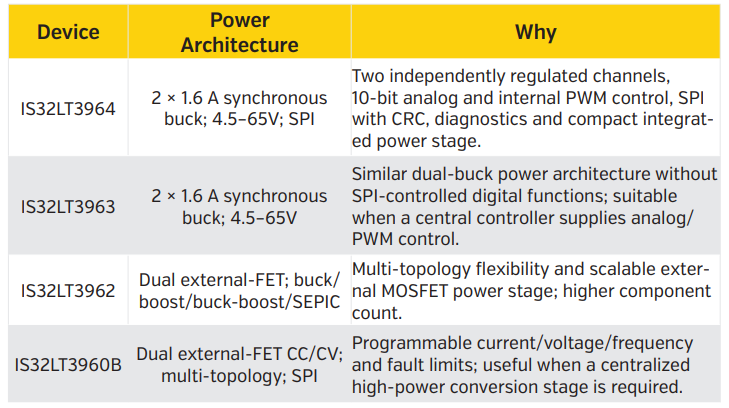 Table 1. Dual Channel Switching LED Drivers for Horticulture Lighting
In the 48V modular grow lamp architecture shown in Figure 1, the IS32LT3964 provides the best balance of power density, digital control and diagnostics. Although each channel supports up to 1.6A, this example operates the LED strings at 350mA, leaving substantial current capability for designs requiring higher‑power strings. Each device integrates two independently regulated synchronous buck channels, allowing two separate spectral LED strings to be driven from the common 48V DC bus. Using the device’s SPI interface, a central spectrum control MCU such as the IS31CS9202 can program channel current and PWM settings across multiple IS32LT3964 modules, simplifying the wiring architecture by replacing numerous dedicated analog or PWM control lines with a shared digital control bus.
Driving eleven IS32LT3964 devices over SPI in a compact system with 22 simultaneously switching buck channels creates a challenging board‑level transient noise environment. The IS32LT3964 enhances communication robustness by incorporating CRC protection on its SPI interface, reducing the risk that noise induced bit errors alter current or PWM register settings.
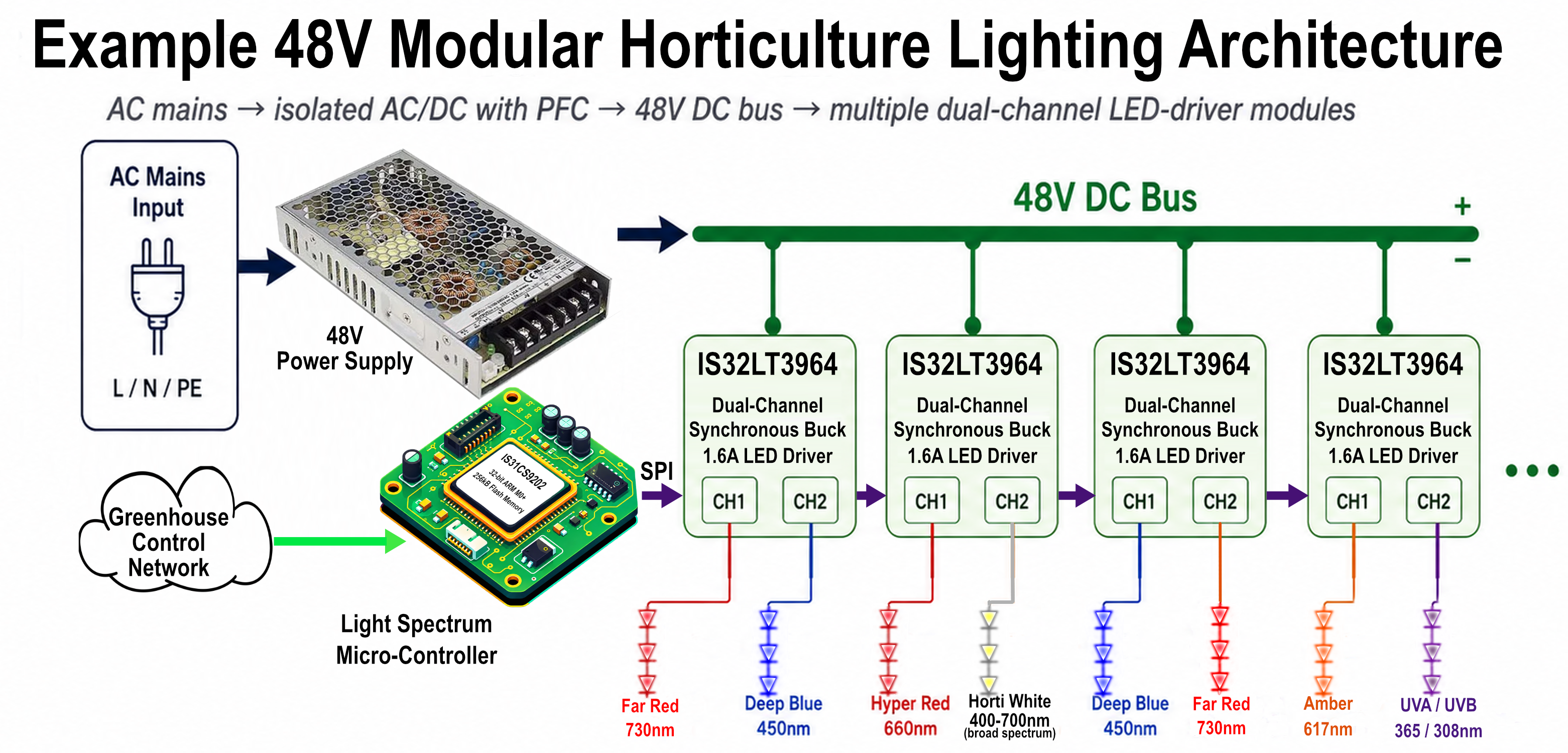
Figure 1. Intelligent grow lamp architecture
IS31CS9202 FOR AUTONOMOUS SPECTRUM CONTROL
The IS31CS9202 can turn the grow lamp from a fixed output lighting system into an intelligent, autonomous spectrum control platform. The MCU contains an ARM Cortex M0+ core, 256 kB ECC embedded Flash, 8 kB of both data and DMA SRAM. It also provides SPI, I²C, UART/LIN, CAN FD, PWM, ADC resources and a dedicated SPI Flash Controller intended for fast access to external LED configuration and pattern data.
In the horticultural lamp architecture, the IS31CS9202 acts as the central light spectrum controller, storing crop and growth stage specific lighting recipes and coordinating the current level, PWM duty cycle, and operating schedule of multiple IS32LT3964 channels. This enables independent control of far red, hyper red, blue, horticulture-white, amber, UVA, and UVB illumination throughout the photoperiod. The MCU can also provide closed-loop sensor control, manage daytime light integral (DLI) and UV exposure, implement thermal derating and safety functions, and connect the lamp to a higher-level greenhouse or facility control network.
MEMORY ALLOCATION FOR LIGHT RECIPES
For most horticultural control applications, the MCU’s 256kB internal ECC Flash will hold both the executable firmware as well as the embedded light recipe tables. Because these recipes are highly structured and compact, they can easily reside in the 256kB Flash. With a 16-hour photo period, a lighting recipe can be defined by a small number of scheduled events; such as sunrise ramp, daytime intensity, UV treatment window, sunset ramp, and OFF time, rather than storing discrete intensity values throughout the day. This event-based approach minimizes memory requirements while allowing the IS31CS9202 to store multiple crop and growth stage-specific spectral recipes alongside the control firmware.
EXAMPLE OF AN 11-DRIVER, 48V MODULAR GROW LAMP
The example grow lamp architecture uses eleven IS32LT3964 devices to provide 22 independently controlled constant-current LED channels, operating at 350mA per string. As summarized in Table 2, the spectral mix is weighted toward hyper-red for high spectral-balance control, with a smaller deep-blue component, supplemental horticulture-white and amber channels, and independently controlled UVA and UVB channels for programmed UV exposure.
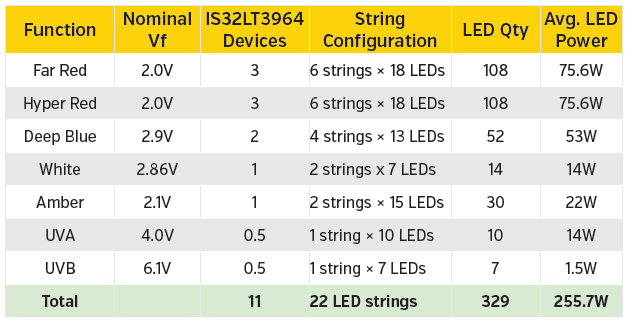 Table 2. Example IS32LT3964 Channel Allocation and LED Power Budget for a 48V Horticultural Grow Lamp
The LED strings consume approximately 255.7W at the stated operating conditions. Assuming 94% efficiency for the IS32LT3964 switching stages, the LED driver modules draw about 272W from the 48V rail, corresponding to about 5.67A. If the centralized isolated AC/DC supply is also assumed to operate at 94% efficiency, the estimated AC input power is about 289.4W. Therefore, a 350W isolated 48V AC/DC supply provides enough design margin for the spectrum control electronics, component tolerances, thermal derating, LED forward voltage variation, conversion losses, and possible increases in UV operating duty cycle.
CONCLUSION
A successful grow lamp combines photobiology, optics, thermal design, power conversion and control. Because plants are driven by photon wavelength, density, and dose rather than human-perceived brightness, precise spectral control is a necessity. Switching LED drivers provide efficient constant current regulation for independent control of multiple spectral LED strings, allowing the LEDs to convert electrical power into targeted photosynthetic wavelengths while minimizing power conversion losses and heat compared with less efficient legacy HID grow lamp technologies.
For 48V modular designs, the IS32LT3964 is ideal for the power stage, offering dual high current synchronous buck channels, fine analog/ PWM dimming, and SPI driven control. Adding an IS31CS9202 MCU to these drivers creates an intelligent spectrum controller capable of storing and executing crop-specific light recipes, monitoring fixture conditions and coordinating timed UVA/UVB treatment. Its 256kB ECC Flash is sufficient for typical control firmware and many light recipes, while the dedicated external SPI/QPI Flash controller provides a path to larger recipe libraries and logging storage.
The result is an architecture that delivers a scalable plant production platform that is engineered to deliver the right photons, at the right intensity, for the right duration and to the right part of the plant canopy.
Get Started on Your Next Horticulture Design:
Contact your local Lumissil representative today to request evaluation boards and sample ICs.
Smart Surfaces Using Lumissil Matrix LED Drivers for Automotive Cabin and Kitchen Appliance
Some of the most interesting Human Machine Interfaces (HMI) in modern automotive cabins and kitchen appliances are the ones that stay hidden until needed. Automakers are removing switches from dashboards and door panels, and appliance makers are doing the same by moving controls behind polymer and tinted glass surfaces. The controls are still there, but now they sit under the surface. As a hand approaches the cabin's dashboard or appliance, a control panel illuminates from what appeared to be a solid material moments before, revealing icons, sliders, and status indicators visible through the surface itself. That is a smart surface display, also called a hidden-until-lit or dead-front display, and it is becoming a trend for both automotive cabin and modern kitchen applications.
The concept is simple, but the implementation is not. A matrix of LEDs sits behind a translucent decorative layer, whether that is a piano-black polymer, wood vinyl, textured fabric, or tinted glass. When the LEDs are off, the surface looks like one continuous material. When they are on, light passes through translucent or laser-etched openings to form crisp icons and animations. Add capacitive touch sensing, and the surface becomes a full control panel while enabling a flat, easy-to-clean surface. Adding capacitive proximity sensing allows the surface to wake as a user's hand approaches, reducing power consumption when it is not in use. This article looks at the engineering behind these displays and the Lumissil products that make them practical in automotive and appliance designs.
WHY SMART SURFACES, AND WHY NOW?
Automotive designers are decluttering the cabin by replacing mechanical switches with backlit surfaces and capacitive touch controls across the center console, door panels, and rear HVAC panel. Industry analysts point in the same direction. The global automotive smart surface market was valued at roughly $6.7 billion in 2024 and is projected to approach $57 billion by 2034. Meanwhile, the same trend is emerging in kitchen appliances.
Recent kitchen design reports point in the same direction: handleless cabinets, cleaner appliance surfaces, and controls that stay hidden until needed. For appliances, this means surfaces that stay dark until needed, then light up for status indication and user control, precisely what smart surface technology delivers.
This user experience is exactly what OEM design studios discuss when enabling applications with fewer physical switches, better cabin ergonomics, ambient lighting, and a cleaner Human Machine Interface (HMI) in both automotive and kitchen applications.
ANATOMY OF A SMART SURFACE
From an engineering standpoint, a smart surface display combines three subsystems.
• LED Matrix Backlighting: Hundreds to thousands of individually dimmed LEDs form icons, 7-segment indicators, and animations behind the decorative surface layer.
• Capacitive Touch Sensing: Electrode patterns beneath the same surface detect finger contact through several millimeters of plastic, tinted glass, or wood vinyl, replacing mechanical buttons entirely.
• Proximity Sensing: The same capacitive front end, tuned for longer range, detects an approaching hand so the interface can wake before the first touch.
The challenge is making all three subsystems work together reliably. LED brightness must be uniform across the matrix so icons do not look blotchy through the decorative surface. Dimming must be flicker-free because a hidden-until-lit display that faintly glows in a dark cabin or kitchen is neither hidden nor premium. Touch and proximity sensing must detect a gloved hand, tolerate moisture, and reject electrical noise from LED drivers sitting only millimeters away. This is where dedicated silicon matters.
INSIDE THE COCKPIT: IS32FL3776 AND IS32FL3761
For automotive cockpit and door panels, the IS32FL3776 is a 36 x 6 matrix LED driver for interior and exterior automotive signaling applications. It provides 36 constant-current channels at up to 60 mA each and supports up to 216 individual LEDs using internal or external PMOS scanning. Per-LED PWM up to 16-bit, combined with 8-bit DC scaling, supports smooth fades and a clean off state for dead-front designs.
The interface is configurable for either UART or SPI (33 MHz), with direct addressing of up to 25 devices on one bus. Spread spectrum, 180-degree phase delay, built-in de-ghosting, and cycle-by-cycle LED open/short detection help address EMI and diagnostic requirements in the vehicle environment.
For larger animated surfaces, the IS32FL3761 scales the matrix size to 33 x 12, supporting 396 individually dimmed LEDs per device. This allows the same LED-driver architecture to support anything from small backlit areas to a large animated panel integrated across the center console.
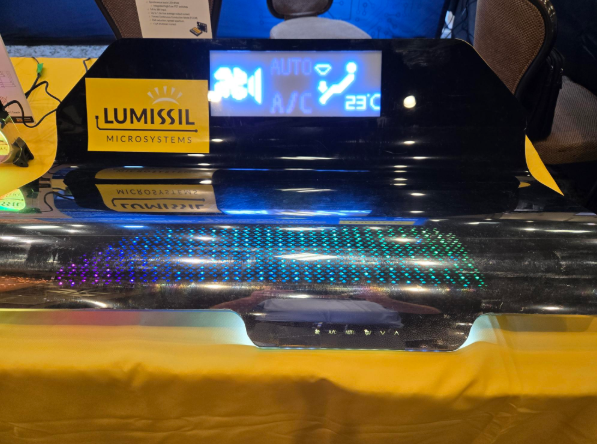
Figure 1: Lumissil Smart Surface demo using IS32FL3776
IN THE KITCHEN: IS31FL3758 AND IS31FL3761
On the consumer side, the IS31FL3758 and IS31FL3761 bring hidden-until-lit control panels to refrigerators, dishwashers, ovens, and range hoods. The IS31FL3758 integrates 40 constant-current sinks, up to 60 mA each, with 9 switches/gate drivers for internal or external PMOS switches. It supports matrices up to 40 x 9, or 360 LEDs.
By using an external PMOS FET architecture, designers have the option to move the switching heat away from the LED driver IC and into external FETs. This allows higher peak LED drive currents while maintaining IC thermal performance. In a 1/9 multiplexed configuration, the result is an average LED current of up to 6.67 mA per LED, making it well suited for bright panels behind tinted overlays where higher light output is required.
For applications requiring a different matrix size and current capability, the IS31FL3761 expands the portfolio. It drives a 33 x 12 matrix, or 396 LEDs, with individual 12-bit PWM, 8-bit DC scaling, and a global 8-bit step current register over a 1 MHz I2C or 12 MHz SPI interface. Both devices integrate de-ghosting, spread spectrum for EMI reduction, and per-LED open/short detection readable by the host MCU.
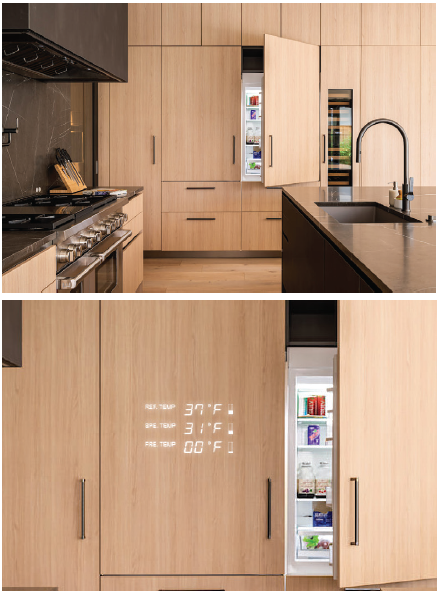
Figure 2: Modern kitchen with smart surface displays
WAKE ON APPROACH, TOUCH TO CONTROL: THE IS31CS897X FAMILY
A smart surface is not smart if you must hunt for it in the dark. Lumissil's IS31CS897x capacitive/proximity sense MCU family, including the IS31CS8974A, IS31CS8975, and IS31CS8977, adds the sensing layer needed for the user interface.
All members use a similar architecture: an 8-bit MCU with a dual-slope charge-sharing capacitive touch controller delivering up to 20-bit SNR, active proximity sensing with mutual-capacitance sensing support, and a shield-electrode output for moisture immunity, which is important for kitchen surfaces that are frequently wiped down or exposed to moisture.
The IS31CS8974A, for example, scans up to 19 touch keys, wakes from a 5 µA sleep on approach or touch, and communicates with the system over I2C, SPI, or UART/LIN. The family members differ in key-input count, package and pin count, memory size, and peripheral mix, so designers can choose the smallest device that covers the panel requirements.
The prefix indicates the grade: IS31CS897x parts are consumer/industrial, while the IS32CS897x versions are AEC-Q100 qualified in wettable QFN packages for automotive requirements.
The pairing is what makes the smart surface interface work: proximity sensing wakes the LED matrix as the user reaches for the surface, capacitive touch allows interaction through the sealed overlay, and the LED driver provides instant visual feedback. An example of these parts together and how they form a smart surface display is shown in the block diagram.
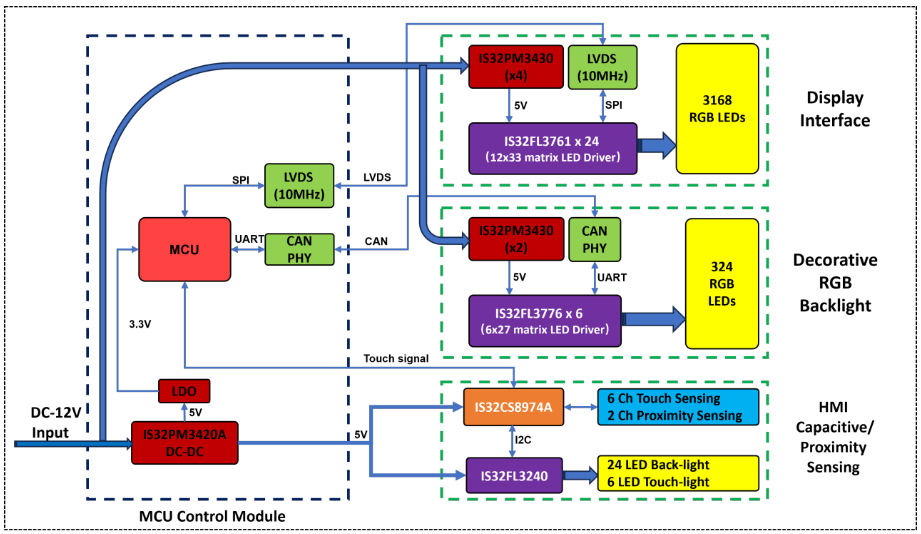
Figure 3: Block diagram example of a smart surface display application
THE INTERFACE IS THE SURFACE
Automotive interiors and kitchen appliances are converging on one idea: the most premium interface is the one you do not see until you need it. With the IS32FL3776 and IS32FL3761 for automotive smart surfaces, the IS31FL3758 and IS31FL3761 for consumer appliances, and the IS31CS897x/IS32CS897x family for capacitive and proximity sensing, Lumissil provides a complete silicon foundation for hidden-until-lit displays.
For datasheets, evaluation kits, and design support, visit www.lumissil.com.
CONTACT
Technical support: marketing@lumissil.com
Sales support: sales@lumissil.com
For any questions please use the following contact information


 analog@lumissil.com